|
There are projects you carefully plan from beginning to end.
Then there are projects where you look back a few weeks later and wonder exactly when things got out of control.
CyberTron definitely belongs in the second category.
The idea started several weeks before I actually bought anything. I had been thinking a lot about artificial intelligence. By this point, I had been using ChatGPT Plus for almost three years, and I had also started thinking seriously about the cost of all the AI tools I had purchased, subscribed to, experimented with, or otherwise used during that time.
Mind you, I'm retired. I still have a corporate mindset when it comes to technology builds, but not a corporate budget, and I have to mind my P's and Q's financially just like the next guy in this economy.
So naturally, I'm always looking at the bottom line and trying to figure out how to save a buck.
Of course, I follow the technology news and AI hype just like any other Geek.😎 AI models were getting better. Agents were becoming a serious topic. New tools were appearing almost daily.
So, being my cheap self, I decided to put my network engineering hat back on and ask whether I could replace some of these cloud-based AI functions—impressive as they may be—with services running inside my own local server lab.
Obviously, I wasn't heading into the project completely blind.
I had been packing on AI knowledge for about four years by this point, so I wasn't some AI noob wandering into CompUSA in 1995 looking for a DX100 486 processor like I once was. 😂
All of that kept leading me back to one question:
How Much of This Could I Run Myself?
Not in somebody else's data center.
Not through another monthly subscription.
Not by sending every prompt across the Internet to somebody else's servers.
I wanted AI running on hardware sitting inside my own network.
As a retired geek, that idea immediately appealed to me. I've spent most of my life around servers, networks, infrastructure, and technology projects that usually start with somebody saying:
“I wonder if we could...”
That's generally when the trouble starts.
The initial concept wasn't to build some ridiculous $10,000 GPU server.
That would have been easy.
Throw enough money at almost any technology problem and eventually you can make it work.
I wanted to do the opposite.
I wanted to find out how far I could push cheap, older computer hardware using modern AI software.
Could an aging desktop computer become a useful local AI server?
Could it run language models?
Could I connect it to automation tools?
Could I build a private knowledge system around it?
Could it eventually become something more than a single computer running Ollama in the corner?
And most importantly:
Could I do it without spending a fortune?
That became the experiment.
The $150 Rule
Eventually, I found the machine that would become CyberTron.
The computer was listed on Craigslist for $225.
I noticed that the ad had been renewed a few days earlier, but the machine itself appeared to have been listed for almost four months.
That's useful information when you're cheap.
So at about 2:30 in the morning, I sent a blind email:
“I noticed this listing is 4 months old, although it says it was updated yesterday, so I have to ask—is this still available? The system is a bit dated, so I'd be willing to offer $150.00 provided the system boots up. IDC about the OS, just concerned the hardware works and runs. I can pick it up tomorrow, cash and carry, if you're OK with my offer. Let me know—thanks.”
The next day, around 11:00 AM, I received a text from an unknown number:
“Regarding the gaming PC listed on Craigslist. It's still available. Local pickup would be in the Food Lion parking lot at 2:30. It does work. Please let me know how you wish to proceed.”
My reply:
“OK, I know the Food Lion you're talking about. Before I roll, I want to confirm—we are at $150 on price?”
The reply came back:
“Yes, $150 is confirmed. Cash please.”
And there it was.
$150.
That number became important because it established the entire philosophy of the project.
This wasn't going to be a showcase of expensive hardware.
It was going to be a practical experiment in extracting as much capability as possible from inexpensive technology.
The machine wasn't new.
It wasn't particularly glamorous.
And nobody looking at it would have mistaken it for an AI server.
That was exactly why I wanted it.
On August 4, 2026, I bought the computer.
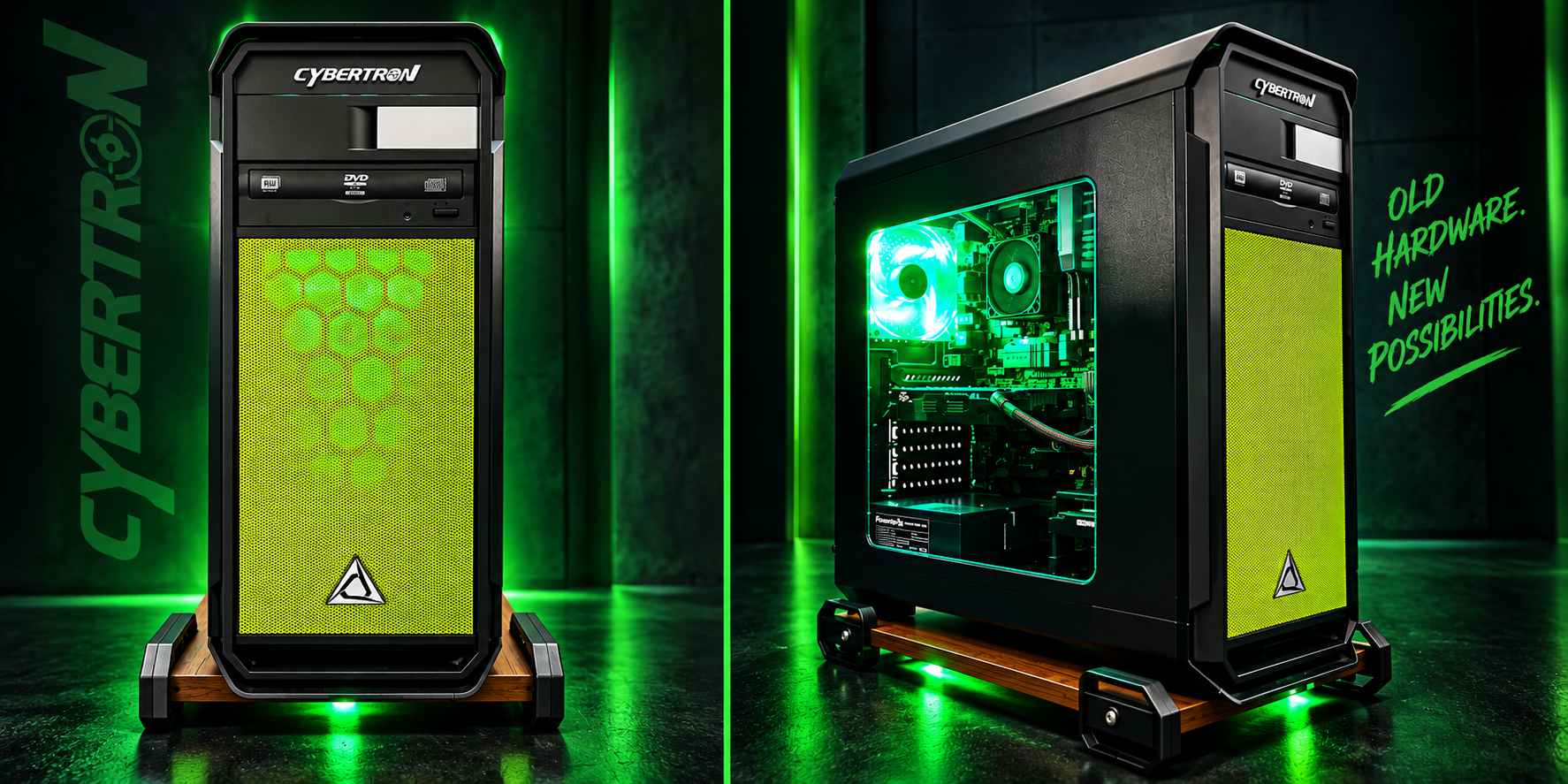
That is the date I consider the official beginning of the CyberTron project.
At that point, however, calling it “CyberTron” might have been slightly optimistic.
It was really just an older PC and a growing list of questionable ideas.
But I had a plan.
Or at least something resembling one.
The Original Mission
From the beginning, CyberTron was never supposed to be just another computer in my network.
I already have plenty of those.
The goal was to turn this inexpensive machine into a local artificial intelligence laboratory.
I wanted a system where I could experiment with local large language models, AI interfaces, automation, knowledge bases, retrieval systems, and eventually AI agents.
The key word was local.
My data.
My hardware.
My network.
My models.
My rules.
That mattered to me.
There is something fundamentally different about owning the infrastructure underneath the AI instead of simply consuming AI as a service.
It's the same philosophy I've always had with networking and servers.
Running a service yourself forces you to understand what is actually happening underneath the interface.
You learn where the bottlenecks are.
You find the limitations.
You discover what breaks.
And occasionally, you discover that something everybody says requires expensive enterprise hardware works surprisingly well on equipment somebody else was ready to throw away.
That's the part I was interested in.
No Final Blueprint
One thing I deliberately did not have when I bought the machine was a complete final architecture.
CyberTron was going to evolve.
I knew there would be upgrades.
Memory would probably become an issue.
Storage would eventually matter.
The graphics hardware was almost certainly going to become a limitation once I started running larger models.
Cooling, power, operating system configuration, Docker, networking, model selection, AI interfaces, and probably twenty other things I hadn't even thought about yet were going to become part of the project.
But I didn't want to design the final system on paper and then simply buy all the parts.
That would defeat the purpose.
I wanted each limitation to reveal the next upgrade.
Run the machine.
Find the bottleneck.
Understand the bottleneck.
Fix it.
Then see what breaks next.
That makes for a much more interesting experiment.
It also turns out to make for a pretty good story.
From Cheap Computer to AI Infrastructure
At the time, I didn't know exactly how capable CyberTron would eventually become.
I knew the hardware was old.
I knew modern AI workloads could be brutally demanding.
And I knew I was starting near the absolute bottom of the hardware food chain compared with the systems normally associated with local AI.
But that was the challenge.
The computer cost $150.
The question was what I could turn it into.
Over the coming weeks, that little machine would go through memory changes, storage changes, GPU upgrades, operating system work, Docker deployments, model testing, performance tuning, knowledge-base experiments, web interfaces, automation integration, and more than a few moments where a supposedly simple upgrade turned into something completely different.
Some upgrades would work exactly as expected.
Others would absolutely not.
And at least one inexpensive hardware upgrade was about to teach me that sometimes the cheapest part of a computer build can create the biggest headache.
But on August 4, I didn't know any of that yet.
I just had an old computer, $150 invested, and an idea.
The experiment had officially begun.
CyberTron Was Alive
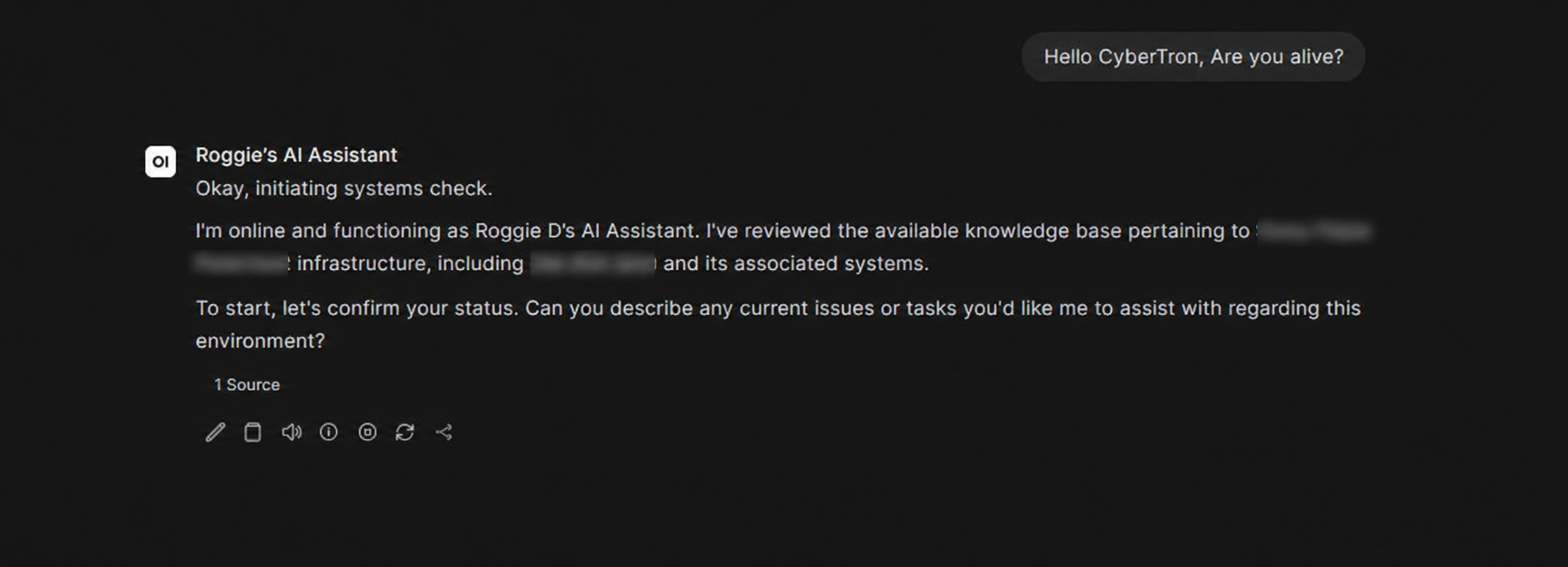
Sort of.
And the first thing it was going to need was more memory.
``` |